What is osmosis?
Osmosis in fiberglass boats refers to a chemical reaction that occurs when water penetrates through the gelcoat and reacts with water-soluble components inside the laminate.
Over time, this process creates pressure pockets beneath the gelcoat, resulting in visible blisters on the hull surface. Although often described simply as “water getting into the hull,” osmosis is actually a complex diffusion and hydrolysis process affecting polyester-based laminates.
Visually, osmosis appears as small or larger blisters forming beneath the gelcoat surface. These blisters are often grouped together and may increase in size and number over time.
Below is an example of how osmotic blistering can appear on a boat hull.
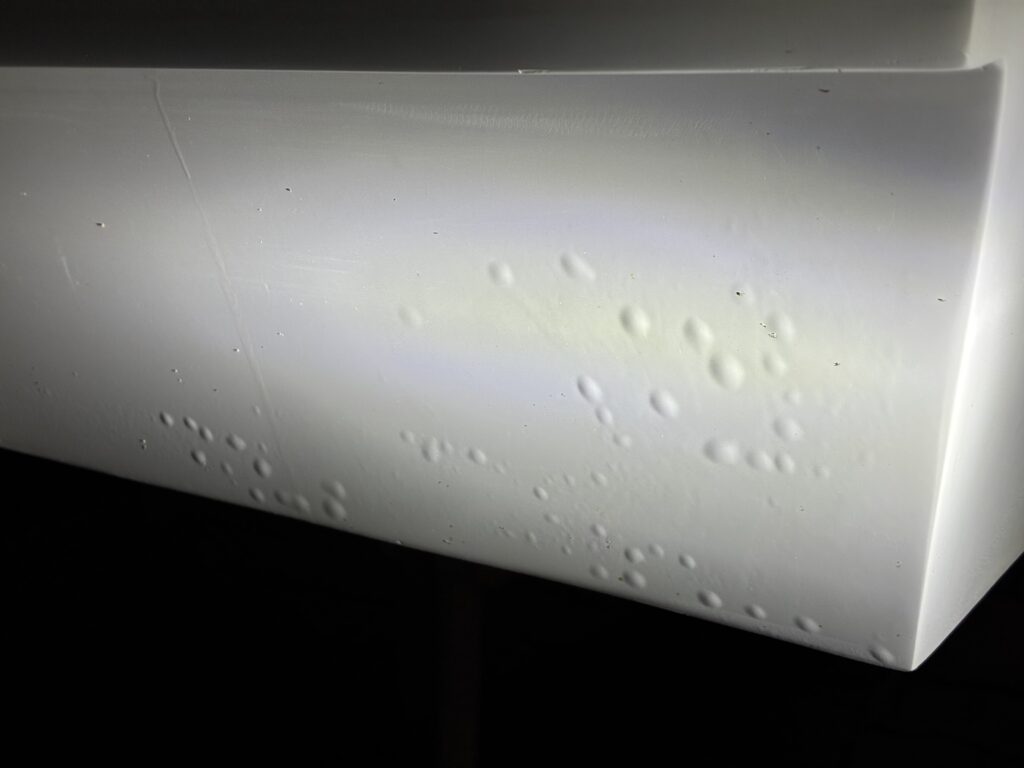
How Does Osmosis Form?
The process typically develops in stages:
- Water Diffusion
Water molecules slowly migrate through microscopic pores in the gelcoat. - Chemical Reaction (Hydrolysis)
Inside the laminate, water reacts with unreacted resins and soluble compounds. - Formation of Acidic Fluid
The reaction creates a concentrated solution trapped beneath the gelcoat. - Pressure Build-Up
Osmotic pressure increases and eventually forms visible blisters. - Blister Rupture & Degradation
Blisters may burst, releasing acidic liquid and damaging surrounding laminate.
Osmosis in a Relatively New Yacht
The occurrence of osmosis in a vessel of this age suggests that the underlying cause may be linked to manufacturing variables such as resin curing process, laminate structure, or gelcoat application. Early blistering is typically not characteristic of normal aging but is more often associated with production or material-related factors.
How Is Osmosis Repaired?
Proper osmosis repair involves removing the affected material and restoring the hull’s protective barrier. A complete and effective repair typically includes:
- Grinding away all compromised gelcoat and affected laminate
- Allowing the exposed laminate to dry thoroughly (often for several weeks or months)
- Monitoring moisture levels before rebuilding
- Reconstructing damaged laminate layers where necessary
- Applying a moisture-resistant barrier coat system
- Reapplying gelcoat or protective finishing layers
Superficial cosmetic treatment may temporarily improve appearance, but long-term success depends on addressing the underlying moisture and laminate condition.
How Was the First Repair Performed?
No formal documentation of the first repair has been provided.
Neither written technical records nor a verbal explanation of the repair methodology were delivered at the time the vessel was returned.
The boat was handed back without any detailed description of the scope of work, materials used, drying time, or structural assessment.
Based on the current hull condition, the relatively short duration of the repair process, and the observation that the vessel remained outdoors for several days after initial grinding, the most probable contributing factors — as assessed by an experienced marine technician — may include:
- Insufficient drying time prior to rebuilding the surface layers
- Application of a new gelcoat layer onto a surface that may not have been fully dry or properly prepared
- Inadequate process control during critical stages of the repair
The recurrence of defects suggests that the underlying moisture and laminate condition may not have been fully addressed during the initial intervention.